
Support article
cPanel vs DirectAdmin: Control Panel Comparison
At miHosting we offer the two most used control panels with the most users. Generally, it is a matter of taste to choose one or the other. Basically both...
At miHosting we offer the two most used control panels with the most users. Generally, it is a matter of taste to choose one or the other. Basically the two control panels do the same things.
A few years ago, this question practically did not exist. Since all hosting companies offered cPanel to our clients. However, since cPanel’s pricing policy shot through the roof, with very significant annual increases, more and more clients and also hosting providers have started to offer DirectAdmin.
Is DirectAdmin comparable to cPanel? In this article we are going to try to answer this question.
Here we will present the differences between cPanel and DirectAdmin for both Reseller and shared hosting services.
Surprisingly, cPanel began a campaign of incessant price growth (800%) in 2019. This has led many users and also providers to seek price stability in alternative control panels. At this level, DirectAdmin undoubtedly stands out. A panel that does everything a hosting user needs. He does it fast and he does it well. At a reasonable price.
What is cPanel and DirectAdmin?
They are what are known as Control Panels. Both allow you to manage your hosting service. Both panels allow you to:
- Install and manage your email
- Manage your hosting files
- Manage your databases
- Install the domains you want
- See the statistics of your services
- Install programs so that they work on your domains
- Manage aspects of the security of your website.
Both cPanel and DirectAdmin allow you to do all these things very easily.
DirectAdmin
Account Management Features
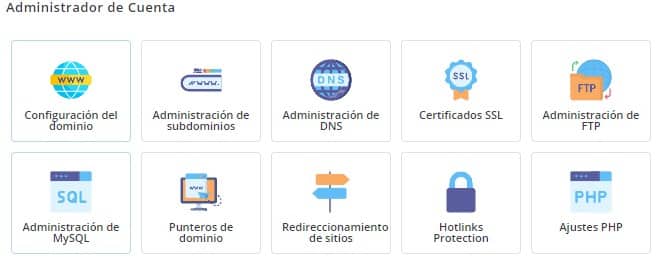
- Configuration of new domains added to your main account. (all our plans are multidomain)
- Creation of subdomains.
- Administration of DNS records of installed domains.
- Installation of SSL certificates, whether free or paid.
- FTP account administration.
- Mysql database administration. Including access to phpMyadmin.
- Redirection of web pages.
- Hotlinking Protection
- PHP Configuration
Email Manager

- Create new email accounts
- Make email redirections to other accounts.
- Auto responders
- Vacation Messages
- AntiSpam system configuration
- Specific filters generated by the user.
- MX Registry Configuration.
- Mail tracking.
Advanced Features
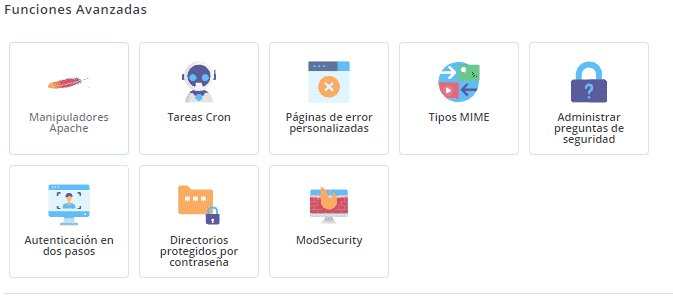
- Configure the extensions recognizable by the Apache server.
- Schedule your cron tasks.
- Customize the error pages for your domain.
- MIME types.
- Configure security questions.
- 2-step authentication.
- Protect directories with password.
- Fine-tune Modsecurity application firewall.
Information and Files
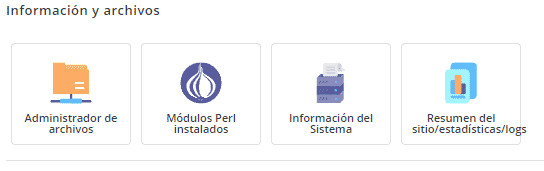
- Administration of all files hosted on your hosting service.
- Information about the installed Perl modules.
- Information about the server where your website is hosted.
- Statistics of your website.
Extra Features
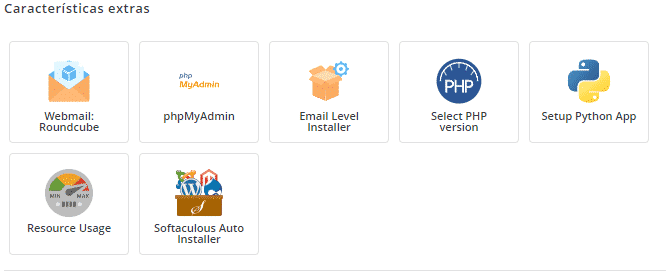
- Direct access to Webmail – Roundcube.
- Access to phpMyAdmin.
- Webmail installer.
- PHP version selector.
- Installation of Python applications
- Use of Resources of your hosting service.
- Installation of web applications automatically. Softaculous
Softaculous App Installer
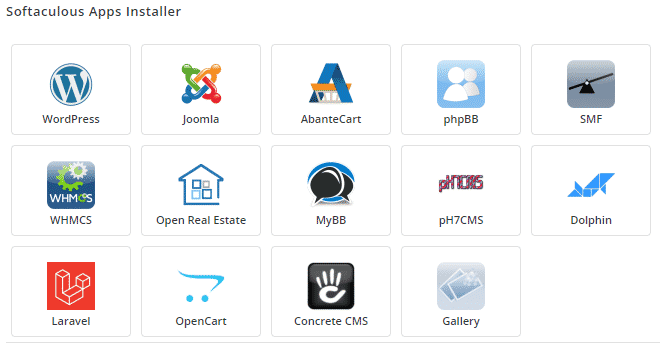
-WordPress
- Joomla
- AvanteCart
- phpBB
- SMF -WHMCS
- Open Real Estate
- MyBB
- and 300 more apps…
cPanel
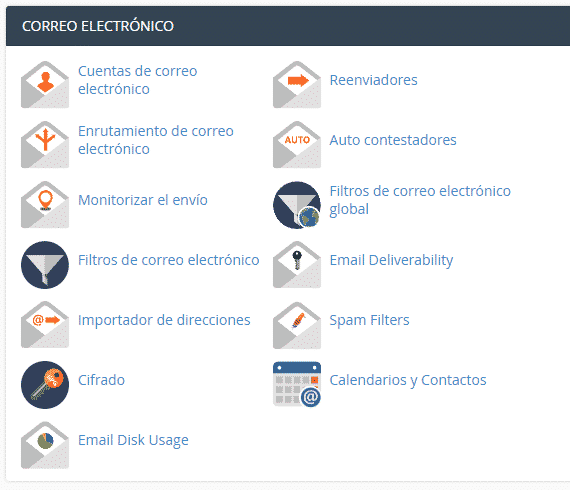
- Creation of emails
- Forwarders
- Email routing
- Auto answering machines
- Shipping monitor.
- Email filters
- SPF and DKim records
- Address Importer
- Spam Filters
- Encryption
- Calendars and contacts
- Email disk space usage
Billing and Support
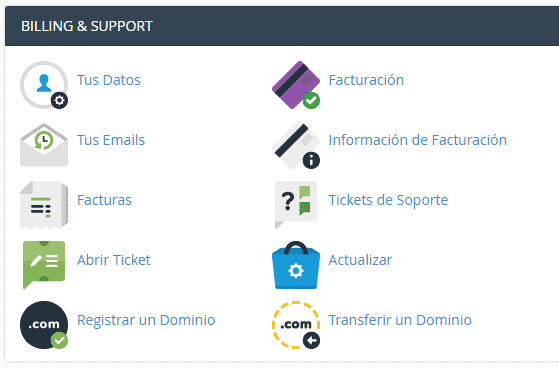
- Access your client area.
- View your billing and invoice data
- Access to emails sent by miHosting
- Your support tickets
- Services update
- Domain registrations.
- Domain transfer.
Files
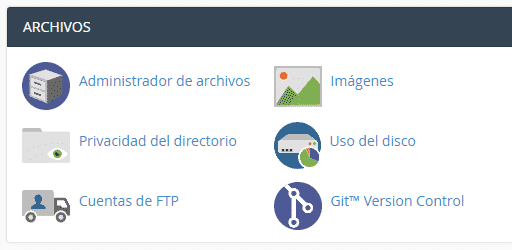
- Manage your files.
- Correction and modification of images.
- Directory protection with password.
- Use of the hosting service’s hard drive.
- FTP accounts
- Access to Git – (Version Control)